


New tackle height headlines World Rugby's five law changes


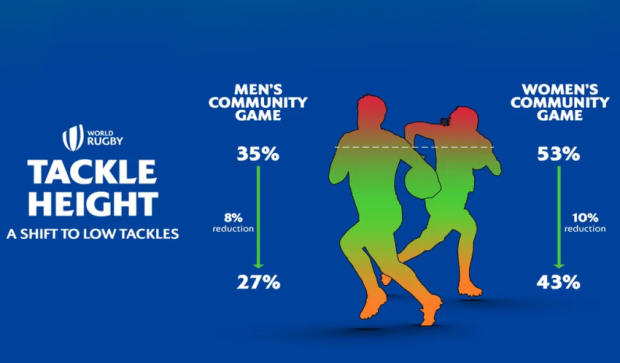
NEWS: World Rugby have approved adoption into full law a lower tackle height in community rugby, following positive trials over the last two years.
The law, which will come into effect from July 1 for seasons that start after that date, allow Unions to choose either waist or base of the sternum.
The decision, which was ratified by World Rugby Council in Dublin, Ireland, comes after extensive evaluation of trials run across 10 national member unions involving more than 150,000 studied tackles demonstrated positive player behavior.
The trials showed a lower legal tackle height was effective in reducing the chances of upright tackles occurring, which are the most likely to cause avoidable head impacts.
The governing body will also begin testing a lower tackle height in the elite game, with initial trials set to take place at the World Rugby Junior World Championship in Georgia later this month.
Several other law trials were also adopted into full law, including the scrum brake foot, restrictions on water carriers entering the field of play, the formal recognition of the television match official as part of the officiating team, and the continued option for elite competitions to use 20-minute red cards if they choose.
“Player welfare is at the heart of everything that rugby does. I welcome the adoption of a lower tackle height into community law,” World Rugby Chairman Brett Robinson said.
“I would like to thank all the unions and academics and most importantly players and referees who took part in the trials that have helped us to reach this point.
“The trials from round the world show that this is the right thing to do to make our game safer and more enjoyable for community players who are the lifeblood of our sport.
“Rugby has always led the way when it comes to making changes considered changes to improve the welfare of our players and alongside provisions such as smart mouthguards in the elite game, we’ve shown time and again that we’ll make the big calls and that we’re getting them right, backed by the evidence.”
