


Bergh's storied journey from ball boy to 'big boss'


The name Bergh is synonymous with rugby in the Western Cape, certainly in the Wellington region.
Piet Bergh served Boland for 30 years, while his sons are also involved in the game.
Pieter Bergh is a successful coach for Griquas, and another son, Oloff Bergh, no, not the brandy, is a coach and Head of Sport at Diamantveld High School.
Pieter Bergh has taken a fabled road to this weekend’s Currie Cup semifinals.
Griquas, three-time champions (1899, 1911 & 1970) and runners-up in 2022, host the Cheetahs in a Central Unions semifinal in Kimberley on Saturday.

For the Griquas coach, it has been an interesting journey.
Schooled in Wellington, the son of the retired former Boland Rugby Union secretary and CEO Piet Bergh, Pieter (jnr) grew up a stone’s throw from the Boland Stadium.
“I could kick the ball from our yard through the [stadium] poles,” Bergh told @rugby365com, adding: “I grew up on the rugby field.”
During his stint at Hugenote Laerskool (primary school) and the High School by the same name (a dual-medium institution), Berg could walk to school every day.
“With my father involved with Boland, I was at every training session when the game was still amateur and players only arrived at training after work, at 19.00 or 20.00 in the evening.
“My mom washed the jerseys and made food for the players.
“When the game turned professional [in 1996], things changed a lot.”
As a regular ball boy in Wellington, Bergh was there when Deon Kayser chased down Robbie Fleck and executed that famous try-saving tackle that is still doing the rounds on social media these days.
(It was back in 2001, a Super 12 match between the Stormers and the Sharks in Wellington. Stormers centre Robbie Fleck broke through the line and was away for the try. Fleck casually strolled in, not realising that the rapid Deon Kayser was right behind him. Kayser effected the tackle brilliantly, knocking the ball out of Fleck’s hands and causing him to nosedive into the turf. The Sharks went on to win that match 23-19.)
Bergh played flyhalf for Boland at the 2003 Craven Week (Under-18), but cricket came calling with a contract in England.
“After the Craven Week, which was, ironically, staged in Wellington, I received a bursary to go study at Potchefstroom University.
“I had to make the call between rugby and cricket, and after discussions with my parents, I chose the rugby option.”
Upon his return to Wellington, he started doing analysis at Boland, assisting current Boland coach Hawies Fourie.
“It was the days of VHS tapes, cutting from one machine to another,” Bergh said, adding: “While helping Hawies, I also coached at my alma mater.
“I realised I was enjoying the coaching aspect more than playing.
“I also realised I had certain shortcomings as a player and I was bitten by the coaching bug.
“Despite enjoying it, I also had some success at age-group teams, and that is where it started.”
From 2006 to 2011, as a performance analyst, he worked with such coaching luminaries as Deon Davids, Louis Koen and Eugene Eloff.
“Loffie [Eloff] saw some potential in me and moved me from an analyst to defence coach and later backline coach at Boland.”
In 2011, when Boland routed a star-studded Eastern Province Kings (captained by Springbok Luke Watson) 43-12 in the First Division Final, Bergh coached a backline of unknowns that would all later make their mark on a much more prominent stage.
It included double World Cup winner Willie le Roux, the late Springbok Cornal Hendricks, fellow Bok Bolla Conradie, and other name players like Danwel Demas, Elgar Watts and in the forwards Ligtoring Landman.
The end of that season saw a mass exodus of players, lured away from Wellington with ‘big’ contracts to Kimberley – Le Roux, Landman, PJ Vermeulen and others.
“The players whispered in somebody’s ear and Griquas approached me to move north to Kimberley as well.”
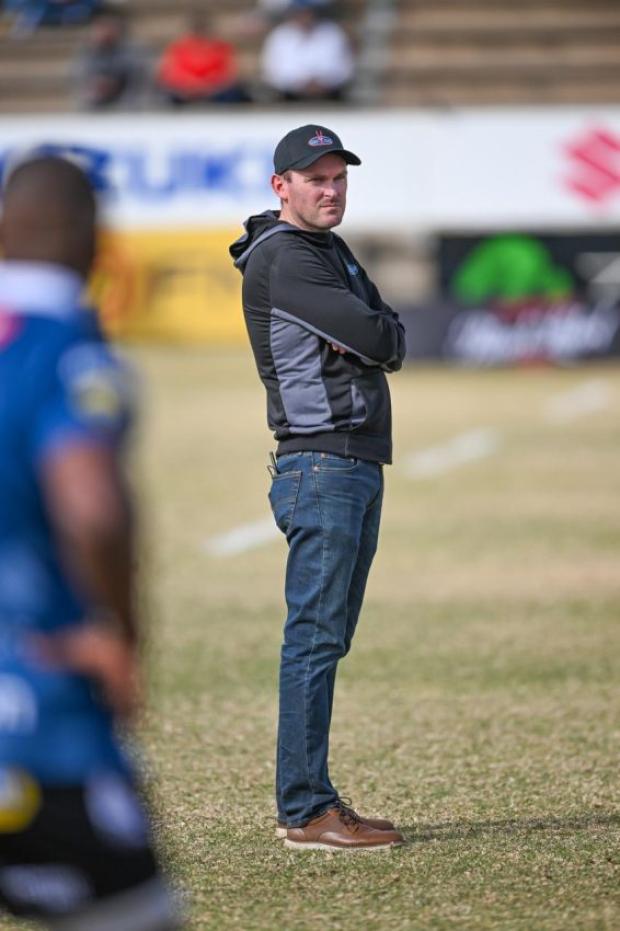
After six years in Kimberley, as a defence and backline coach, Bergh got shortlisted for the head coach position, but lost out to Brent Janse van Rensburg, who brought in his own support staff.
In a fortunate turn of events, the Central University of Technology was in the market for a head coach.
Bergh wasted no time saying ‘yes’ when the offer was made to move to Bloemfontein.
“I was disappointed not getting the Griquas job,” Bergh told @rugby365com, adding: “However, in hindsight, it was the best thing that could have happened to me.
“I may have thought I was ready for the head coach position [in Kimberley], but now I know better.
“To coach at Varsity Cup level taught me a lot in those three years, 2019 to 2021.”
In 2021, the position of head coach at Griquas became available again, and Bergh jumped at the opportunity.
Since his return to Kimberley, Griquas won the SA Cup (2024), were runners-up this year and were also Currie Cup runners-up in 2022.
With the limited resources at his disposal in the country’s ‘diamond capital’, Bergh has to be very innovative in his approach to coaching.
The two principles that mark his team’s game are ‘applying pressure’ and being ‘tactically very astute’.
“I will try and come up with something new, not seen before, in every game,” he said, adding: “I am not scared to try something new and then apply pressure to the opposition in all aspects – scrums, line-outs, breakdown, etc – and then be flexible.
“We must have the ability to adjust to the game situation.”
Bergh, as a coach with his bedrock in analysis, is also very statistical-driven coach, similar to Springbok coach Rassie Erasmus’ famed ‘battle stats’.
“I base a lot of my selection and tactical planning on data,” Bergh said.
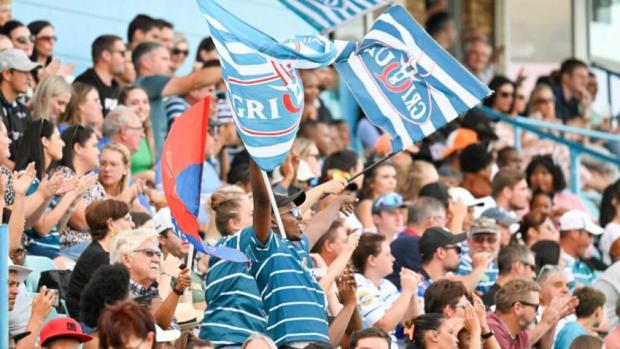
The financial limitations that come with coaching in a ‘rural’ union are certainly one of Bergh’s biggest challenges.
Not only is he limited to the number of players he can contract, but travel and accommodation are also aspects where they are often severely hamstrung.
It is a regular occurrence for Griquas to travel overnight by bus, play the game and travel back to Kimberley after the game.
Flights from Kimberley only go to Johannesburg and Cape Town. That means going to places like Nelspruit and Durban for games is a long bus ride, as the costs of flying to Johannesburg and then on to a second destination are too prohibitive.
“Travel and accommodation are often our biggest challenges,” Bergh told @rugby365com, adding: “While retaining players and building a coaching panel are also complicated.
“I would love to have more specialist trainers, but we all have to ‘double-up’ in several aspects of our work.
“We don’t even have a full-time team doctor.
“The finances [or lack thereof] limit us in a number of aspects.”
That makes Griquas’ achievement as a long-standing regular in the Currie Cup (South Africa’s premier domestic competition) very special.
Since the game turned professional in 1996, they have never been demoted to the First Division (second tier).
None of the so-called ‘smaller’ unions can claim this.
The passionate involvement of former Springbok coach Andre Markgraaff ensures the union is administered very well, but with no international exposure, obtaining big sponsorships remains a challenge.
“A small union can make progress if they have sponsors and is administered very well.
“A perfect example of that is Boland, who struggled for years until the Stellenbosch Academy of Sport and a consortium led by the Motsepe family became their equity partners. Now they can contract quality coaches and players, which has allowed them to reach the semifinals in their first year back in the Currie Cup.
“That is why I feel we [Griquas], the Cheetahs and Pumas are ready to play in another [international] competition.
“We may not be ready for the United Rugby Championship yet, but if we get the same broadcast funding, an additional ZAR20-million, we’ll be able to field a far more competitive team in an international competition.”
Retaining players for two to three years is also key to sustained success.
The smaller unions, non-international domestic teams, are limited to a budget of just ZAR20-million per year.
At best, Griquas have only a quarter of the budget that franchises like the Lions and Stormers have, and even smaller when compared to the Bulls and Sharks.
Apart from the Big Hole, the world’s largest hand-dug excavation, which is a remnant of the diamond rush that made the city famous, the only real attraction for players in Kimberley is that they can use it as a stepping stone to earn contracts at the cash-flush or ‘bigger’ franchises.
The region’s infrastructure is, unfortunately, declining, to put it mildly, and it is no longer a big tourism attraction.
That means the ‘stepping stone’ factor remains the biggest attraction for players.
It is certainly not a monetary move.
As a small, rural town, there is also a family atmosphere, and players are within five minutes of each other if there is a desire for a social get-together.
Attending to family commitments is also much easier and a quality of life that you don’t get in many places in the country.
Bergh readily admits he has ‘ambitions’ to coach at a higher level.
“I believe I am good enough to coach at URC level and my dream is to be involved at the Springboks at some stage,” he concluded.
At 40, one of the youngest head coaches in South Africa, he has almost 20 years coaching experience and an impressive CV!
@king365ed
@rugby365com
