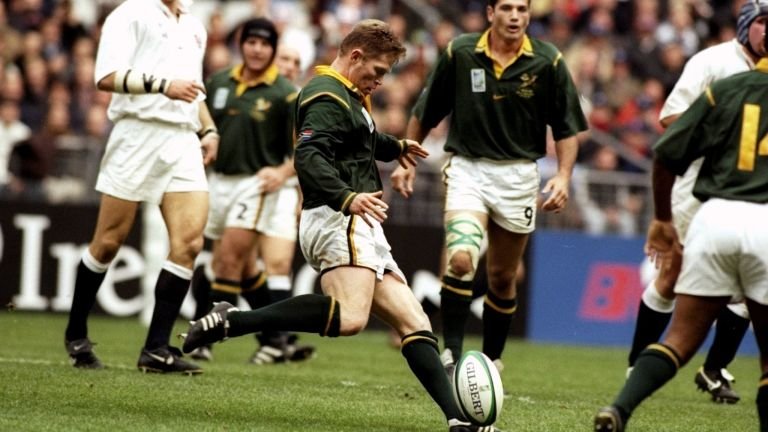
How the drop-goal got the boot


But the drop goal has been forgotten at this World Cup in the relentless drive for the thrill of the try.
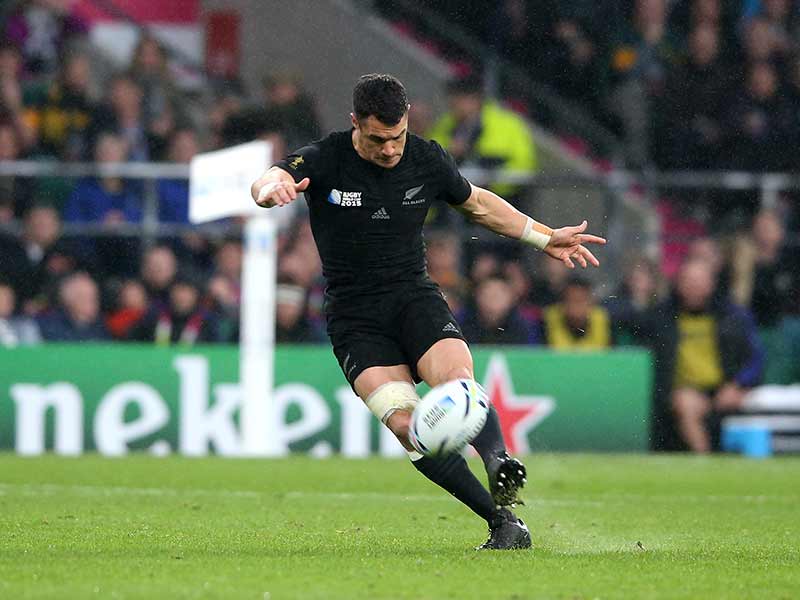
When New Zealand flyhalf Dan Carter struck a drop-goal in the All Blacks' 20-18 semifinal win over South Africa last weekend it was only the sixth scored at this World Cup.
 The lowest number of drop-goals at a World Cup is 14 at the 2007 edition. The tally is unlikely to be exceeded this year as there is just Friday's third place play-off between Argentina and South Africa and Saturday's Australia-New Zealand final remaining.
But why the relative absence, given the value of a drop-goal remains three points?
Carter's effort at Twickenham, which came early in the second-half with the All Blacks a man down and 7-12 behind, was a critical moment in the game, according to South Africa assistant coach John McFarland.
"The key turning point for me was the drop-goal with Dan Carter with 14 [men]," McFarland said.
"That gave them hope."
South Africa flyhalf Handre Pollard had kicked drop-goals during South Africa's wins over Scotland and Wales
"We identified drops as being the key," said McFarland. "If you look at Handre’s drops against Scotland and Wales they took us clear on the scoreboard."
McFarland was a member of the Springbok backroom staff when Jannie de Beer kicked a Test record five drop-goals in a match during South Africa's 44-21 quarterfinal win over England in Paris at the 1999 World Cup.
Asked why the drop-goal is now increasingly rare, he said: "I think the quality of rugby in this tournament has been fantastic. I just think it is going through the flyhalves’ minds to score tries and not win penalties or drops."
Stransky said the advent of bonus points for tries in the pool phase had made the drop-goal a less attractive option.
"The risk is you give the ball away," Stransky told the Daily Telegraph. "And in the modern game if you give the ball away you might not see it again for five minutes.
"But done well it [the drop-goal] is difficult to defend against," he added.
That was certainly the case for England when de Beer produced his Stade de France masterclass 16 years ago.
"It was a helpless feeling … We couldn't get anywhere near him," recalled England great Martin Johnson, who four years later found himself lifting the World Cup trophy after Wilkinson's drop-goal exploits against Australia in Sydney.
Yet while there was praise for de Beer's skill – two of his drops sailed over from 45 metres – and the tactical planning behind it, his record was also greeted in some quarters with calls for the drop-goal to be reduced to a point, as in rugby league.
De Beer later highlighted why the drop-goal provokes a sense of unease among union purists who see the sport, primarily, as a handling and running game.
 "The five drop-goals were probably in the space of about 20-30 [second-half] minutes," said de Beer, only starting for South Africa in 1999 because of an injury to first-choice flyhalf Henry Honiball.
"That's 15 points against you without doing anything wrong. It must have been demoralising for them [England], you are not doing anything wrong but points get scored against you.
"That's what makes the drop-goal unique in that sense: you can go out there and play 100 percent correct and still get points against you."
Agence France-Presse